
As part of the ESIA Report for the "Ulaanbaatar Metro" project, the baseline study to determine the air quality along the metro route and surrounding areas has been completed. The purpose of this study is to document the environmental conditions before the commencement of construction and to establish baseline data for monitoring public health and safety during the construction phase.
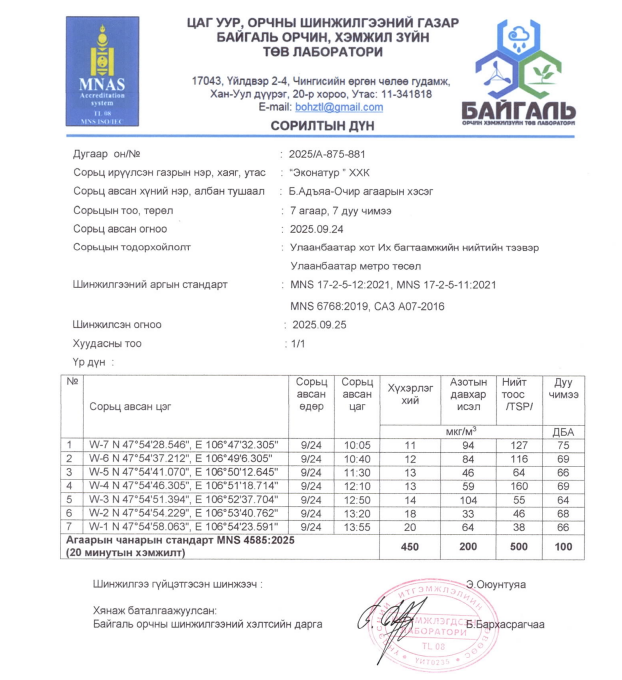
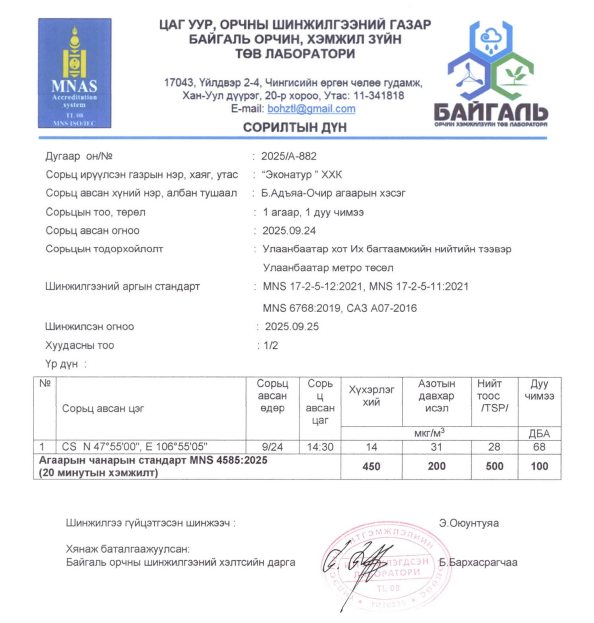
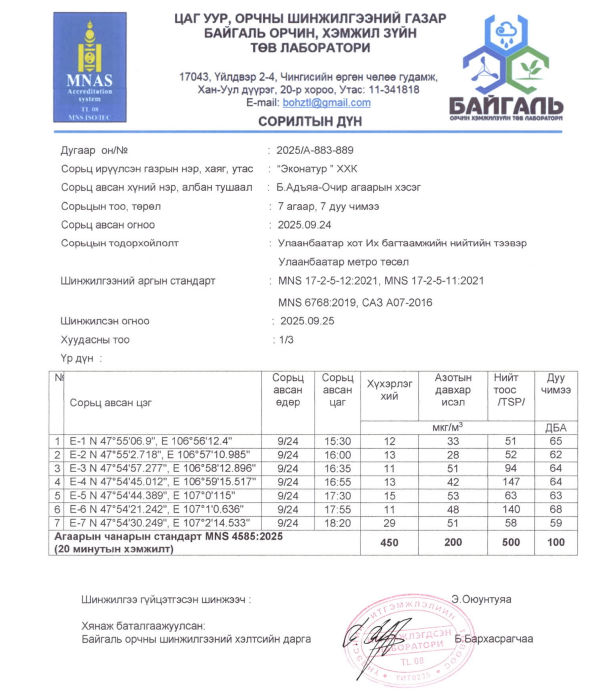
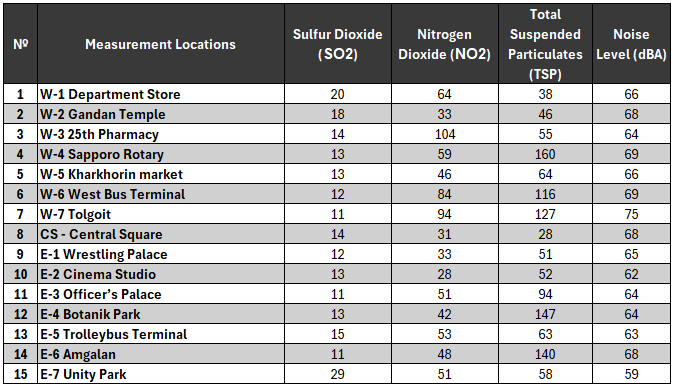
Field measurements and analyses were conducted by the Central Laboratory of Environmental Metrology under the National Agency for Meteorology and Environmental Monitoring. A total of 16 representative locations (15 points along Peace Avenue and 1 point near the depot area) were selected to determine the following key indicators in accordance with national standards.
Key Findings and Analysis:
During the measurement process, certain locations (such as Sapporo Rotary, Botanik Park, and Tolgoit) showed relatively higher levels of particulate matter (dust) and gas concentrations compared to other points. These results reflect the current urban environmental conditions of Ulaanbaatar, primarily driven by high traffic density and areas of exposed soil in those specific vicinities.
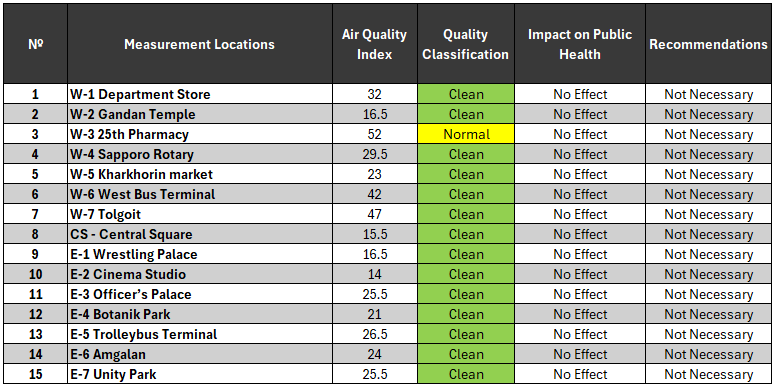
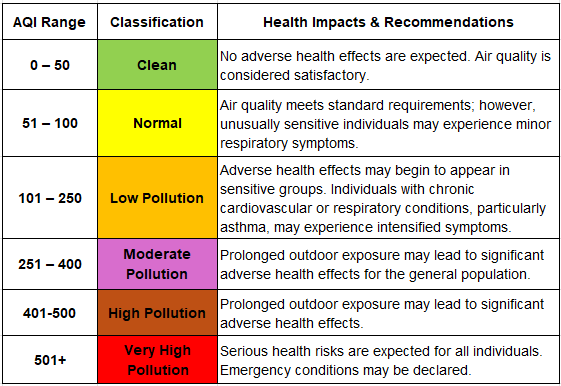
The current air quality conditions prior to the commencement of metro construction pose no risk to public health. As all measured parameters fall below the maximum permissible limits of national standards, our primary objective is to ensure this "Clean" status is maintained throughout the construction phase.
The Project Unit will implement specialized management strategies to mitigate dust and noise (such as regular dust suppression/watering and the installation of protective barriers). Furthermore, continuous monitoring will be conducted to ensure the stable preservation of a safe living environment for all citizens.