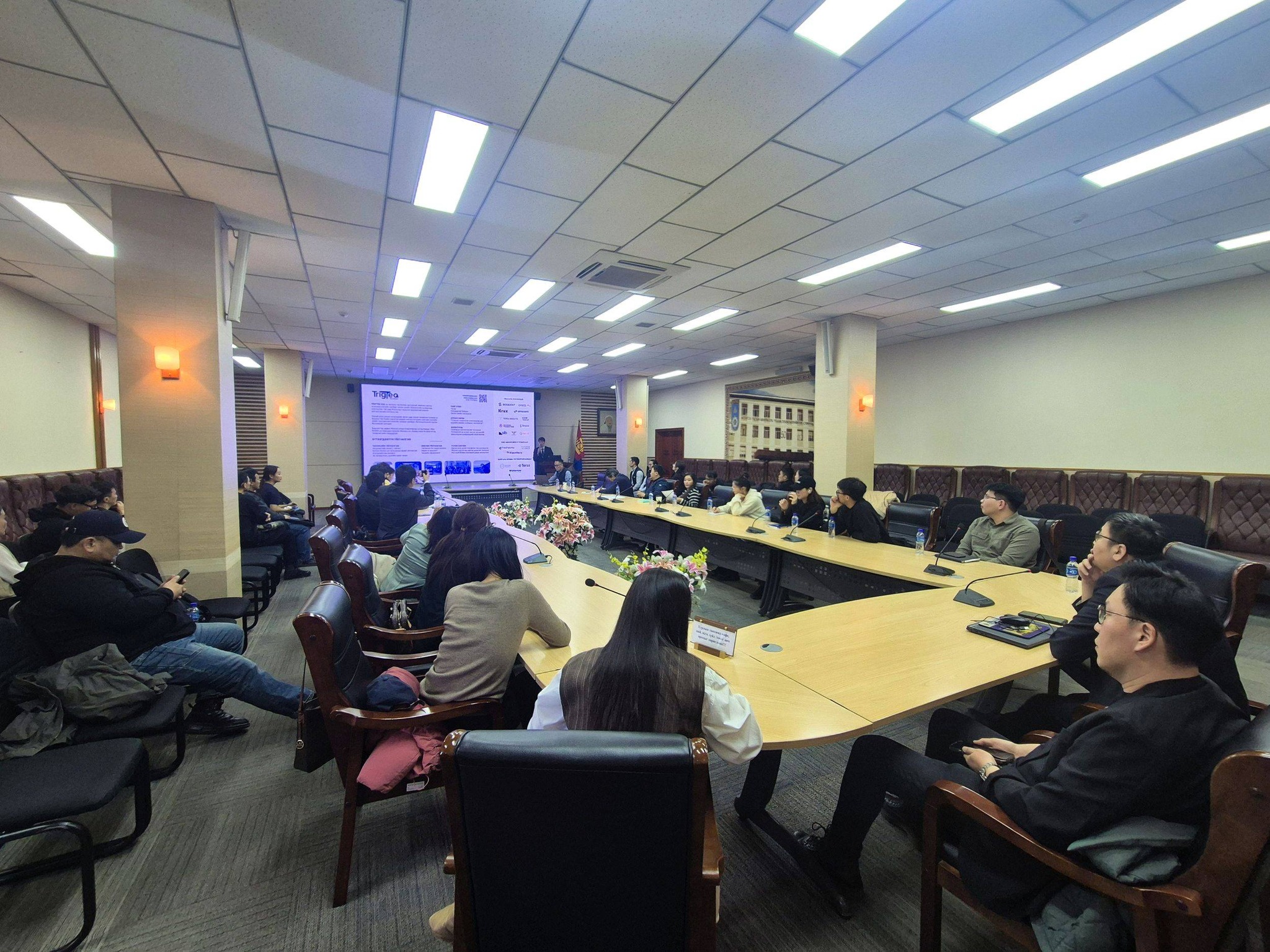
The detailed soil investigation for the Ulaanbaatar Metro Depot site has been completed in stages as part of the metro project's development.
Given that the Depot will serve as the central hub for train maintenance and technical operations, precise assessment of soil bearing capacity and stability is critical for ensuring long-term structural safety.
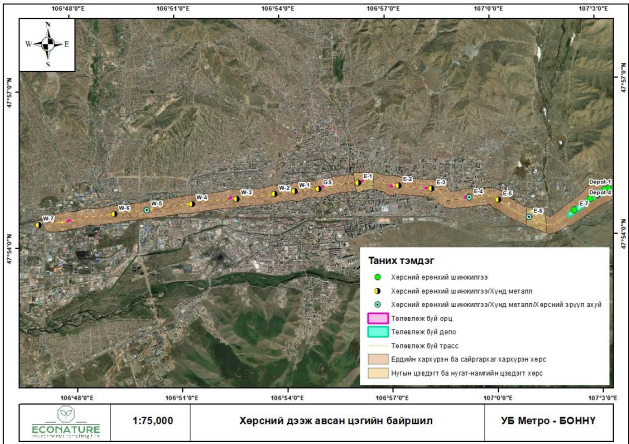
During the preparatory phase, Google Earth databases, satellite imagery, and topographic base maps were used to characterize soil distribution and dominant properties at the Depot construction site, enabling the pre-identification of precise sampling points.
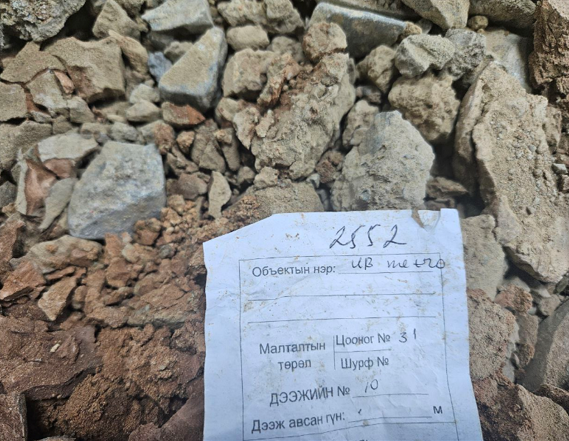
Soil Research and Analysis
As part of the development of the ESIA report, field research and sampling were conducted in strict accordance with relevant standards.
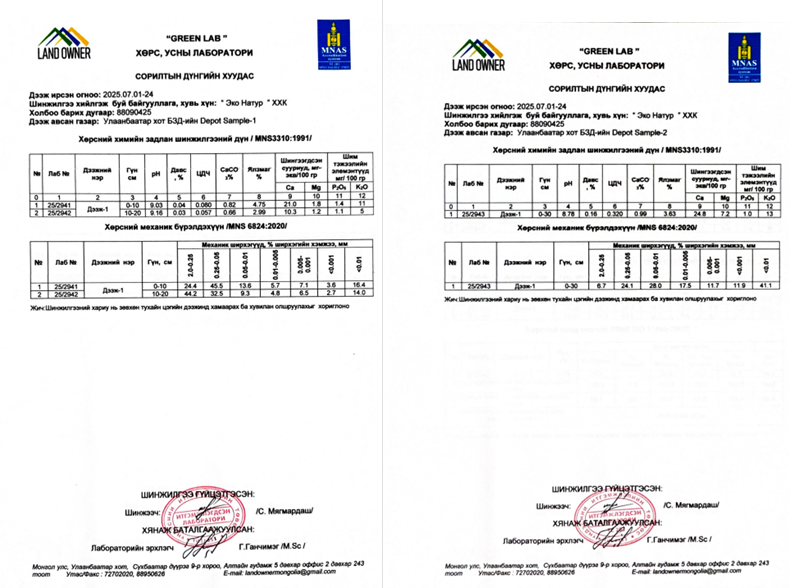
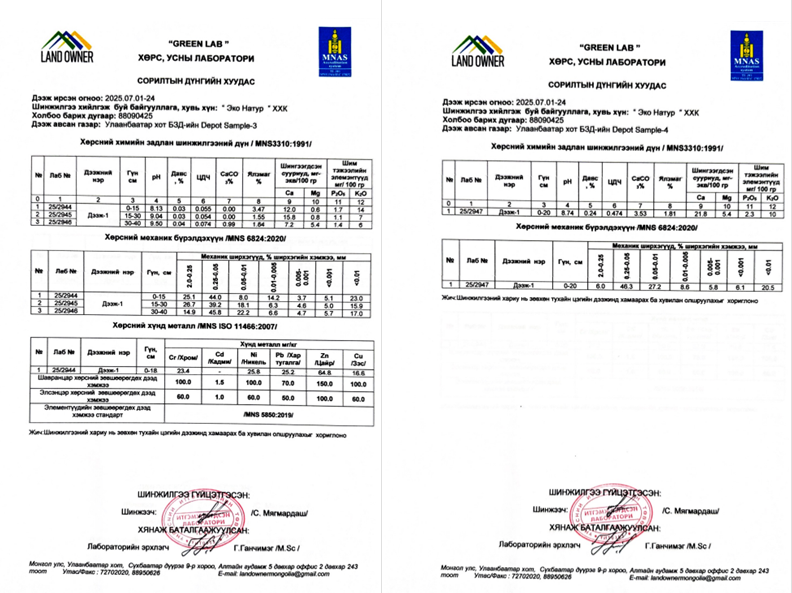
Analysis Information
- Duration: July 01–24, 2025
- Laboratory: “GREEN LAB” Soil and Water Testing Laboratory
- Sampling Organization: “Eco Nature” LLC
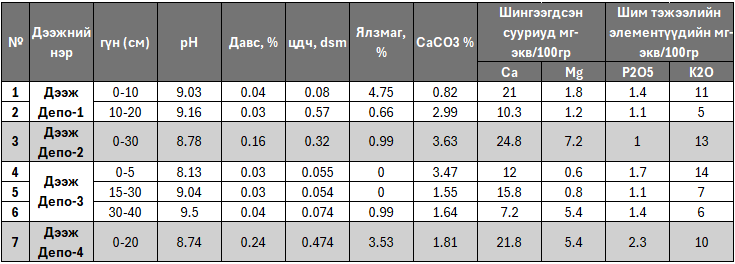
Results of Soil Chemical Analysis
- Impact on Public Health: The study confirms that essential minerals within the soil composition (Phosphorus, Potassium, and Calcium) remain at normal levels. The alkaline nature of the soil (pH 8.13–9.5) is a typical characteristic of urban settlement areas in Ulaanbaatar. This alkalinity does not pose a direct negative impact on public health; rather, it is a parameter primarily relevant to plant growth and vegetation.
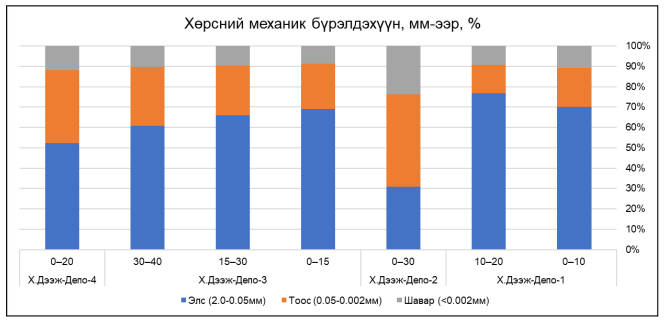
- Structural Safety and Soil Composition: According to scientific classification, the soil structure is categorized as "loamy" (шавранцар). This is considered one of the most favorable soil types for the construction of underground metro facilities.
- Stability and Strength: The optimal balance between soil density and porosity indicates high structural integrity, meaning there is a minimal risk of soil settlement (sinking) during construction activities.
- Permeability: The prevalence of a sandy-loam structure allows rainwater to infiltrate the ground efficiently. This natural drainage capability is a significant advantage as it prevents the accumulation of surface water and potential flooding around the project site.
Conclusion
The condition of the soil surveyed poses no harm to public health or the living environment. Furthermore, the soil characteristics provide favorable technical conditions for the engineering solutions required in the metro's construction and assembly.
By conducting this detailed soil analysis within the framework of the ESIA Report, the project has established a factual baseline. This data will serve as the fundamental basis for monitoring, analysis, and evaluation to prevent soil contamination and ensure public safety throughout the construction process.
LABORATORY ANALYSIS RESULTS